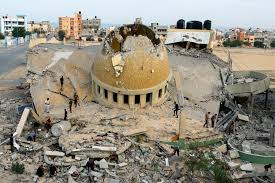
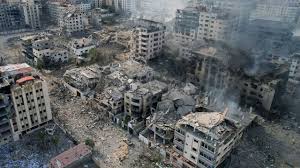
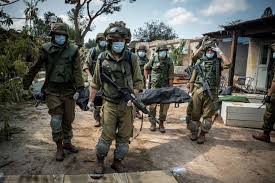
A humanitarian crisis is rapidly unveiling in Gaza, as trapped residents, amongst others are cut off from essential amenities like food and electricity, faced in the fourth day of Israeli airstrikes in response to Hamas’ deadly attack on Israel, which has killed not less than 1,200 people and held up to 150 hostage.
Nadine Abdul Latif, 13, of Gaza City’s Al Rimal neighborhood, said she and her family were told by neighbors and relatives to evacuate on Monday after Israel said it would target the area. But they decided to stay as “we have no safe place to go to,” she said.
Her father Nihad has been missing since the Hamas attack on Saturday. He had been working in Israel, but after Hamas’ Saturday attack, the family lost contact with him.
The Gaza strip – the coastal enclave that Hamas controls – has been pummeled by airstrikes since Israeli Defense Minister Yoav Gallant ordered a “complete siege” on the area, including halting supplies of electricity, food, water and fuel to the enclave. “We are fighting barbarians and will respond accordingly,” Gallant said.
Israeli fighter jets struck more than 200 targets in Gaza overnight, the Israel Defense Forces said in a statement. The death toll in Gaza now stands at over 900 people according to the Palestinian Ministry of Health in Gaza.
The Palestinian interior ministry said most of the targets were “towers, residential buildings, civil and service facilities, and many mosques.” Hamas denied that it used any of the targeted towers.
Tariq Al Hillu, a 29-year-old resident of Al Sudaniya in northern Gaza, described complete chaos when airstrikes struck his neighborhood Sunday morning.
“My family members began screaming and rushing out of the house, each of us fleeing in different directions,”. He also said that his entire neighborhood had been destroyed “without any prior warning.”
His neighbors were trapped under the rubble, and he could hear their calls for help, he said.
United Nations Relief and Works Agency for Palestine Refugees (UNRWA) said it has turned 83 of its schools in Gaza into makeshift shelters but on Monday they were already at 90% capacity, with more than 137,000 people been protected from Israeli strikes.
Unlike cities in southern Israel, the territory doesn’t have dedicated bomb shelters or bunkers that shield civilians from airstrikes.
Gaza is one of the most densely populated places on earth, where about two million people live in an area of 140 square miles. More than half of its residents are food insecure and live under the poverty line, according to the UNRWA.
Israel, which controls most of Gaza’s electricity, water, fuel and some of its food, already imposes a strict land, sea and air blockade on Gaza, but used to allow some trade and humanitarian assistance through the two crossings that it controls.
The United Nations Secretary General Antonio Guterres on Monday warned that the humanitarian situation in Gaza was already “extremely dire before these hostilities” and “now it will only deteriorate exponentially.”
The Gaza Strip has been the target of Israeli airstrikes in multiple conflicts since Israeli forces withdrew from the territory in 2005. The fighting has often taken place between Israel and Palestinian factions in Gaza, including Hamas and Islamic Jihad.
A potential Israeli ground invasion, if it were to happen, could make worse the humanitarian situation there.