



BY OSABUOHIEN VIVIAN-ROSE
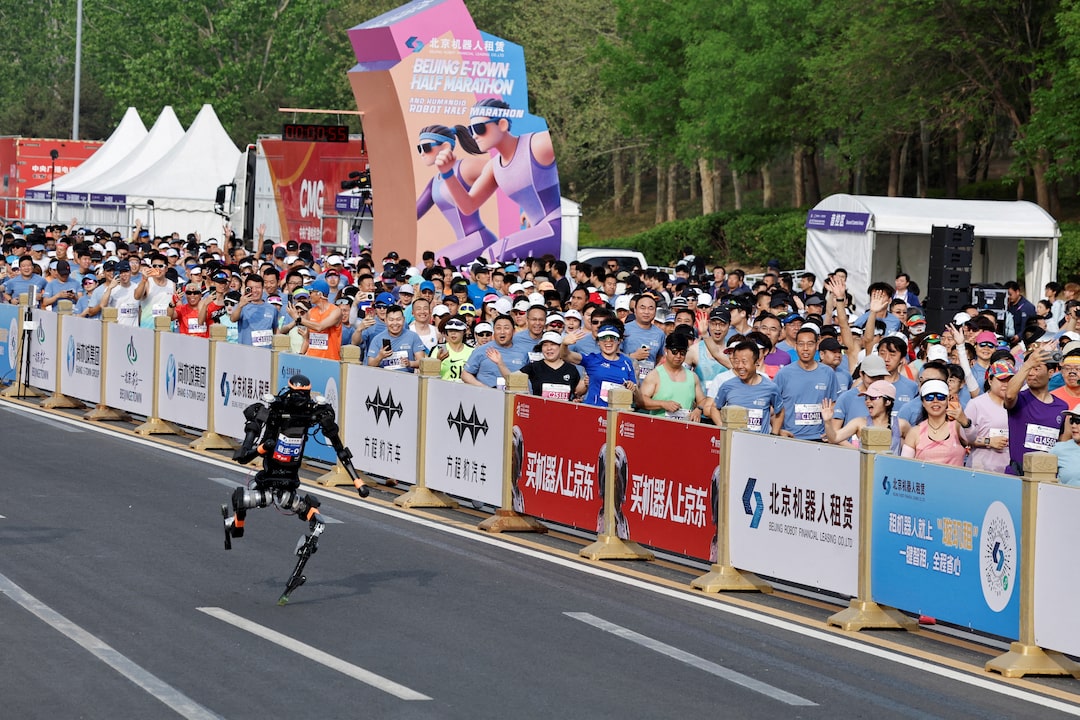
Humanoid robots stunned spectators in Beijing on Sunday as they outpaced human runners in a half-marathon, marking a major leap forward in robotics and artificial intelligence.

More than 100 teams participated in this year’s race, a sharp increase from around 20 in the inaugural event last year, where most robots struggled to finish. This time, the improvement was undeniable—several robots not only completed the 21-kilometre course but also beat top human athletes by over 10 minutes.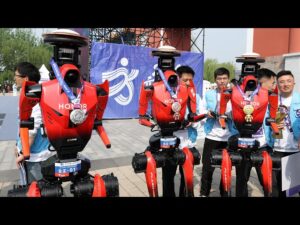

The standout performer, developed by Honor, crossed the finish line in an astonishing 50 minutes and 26 seconds. That time was faster than the current human half-marathon world record set by Jacob Kiplimo.
Unlike last year, when many machines relied on remote control, nearly half of the robots in this year’s race navigated the challenging terrain autonomously.
Separate tracks ensured safety, allowing both robots and over 12,000 human runners to compete side by side without interference.
Engineers revealed that the winning robot was designed with leg proportions similar to elite athletes and featured advanced liquid cooling technology adapted from smartphones. According to team engineer Du Xiaodi, the goal goes far beyond racing.
“Speed helps improve durability, balance, and cooling systems,” he explained. “These advancements can eventually be applied in industries like manufacturing.”
Spectators were equally impressed. Many saw the robots’ fluid movements and independent navigation as clear evidence of how quickly AI technology is evolving.
However, experts caution that despite these achievements, humanoid robots are still far from replacing humans in complex environments. Tasks requiring fine motor skills, adaptability, and real-world perception remain significant challenges.
Even so, China continues to invest heavily in robotics, aiming to lead globally in this emerging field. Events like this half-marathon highlight both the progress made and the vast potential ahead.


