


BY OSABUOHIEN VIVIAN ROSE
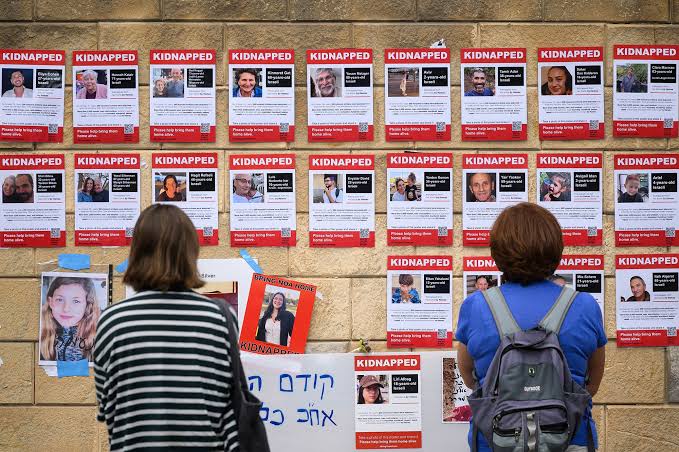
In the first phase of an emerging ceasefire agreement being finalized by negotiators in Doha, Hamas is set to release 33 hostages, according to two Israeli officials, the first positive sign in months that a truce in the Israel-Hamas war may be in sight. Officials have expressed cautious optimism that a deal could soon be announced to end the 15 month-old war that has destabilized the Middle East and devastated Gaza, allow for more aid into the besieged Palestinian enclave, and ensure the return of dozens of hostages held by Hamas since its attack on Israel on October 7, 2023.
Hamas and its allies still hold 94 of the 251 hostages taken from Israel, at least 34 of whom are believed to be dead, according to the Israeli government.
Israel believes that most of the 33 hostages to be released in the first phase of the deal are alive, a senior Israeli official told reporters on Monday, but the bodies of dead captives will also likely be among those released. The first phase would take place over an initial 42-day ceasefire.
The senior Israeli official said the parties appear to be on the verge of an agreement and that Israel is prepared to immediately implement the deal once it has been inked.
US President Joe Biden expressed similar optimism in a speech Monday focused on foreign policy, saying the United States was “pressing hard to close this.”
“The deal we have structured would free the hostages, halt the fighting, provide security to Israel, and allow us to significantly surge humanitarian assistance to the Palestinians who suffered terribly in this war that Hamas started. They have been through hell,” Biden said.
Meanwhile, President-elect Donald Trump told Newsmax that his understanding is that “there’s been a handshake and they’re getting it finished.” Trump’s incoming special envoy to the Middle East Steve Witkoff previously told reporters he was working alongside Biden administration officials during the negotiations, and hoped to get a temporary ceasefire deal enacted before Trump’s inauguration on Monday.
A final round of proximity talks to finalize any issues was scheduled to take place in Doha on Tuesday, a source close to the negotiations said. The same day, some of the hostages’ families have been invited to meet Israeli Prime Minister Benjamin Netanyahu, according to the Hostages and Missing Families Forum.
On Tuesday, protesters formed a human chain outside the Israeli parliament, also known as the Knesset, to demand the release of all remaining hostages held in Gaza. Many held large banners with the names and faces of the captives alongside the words “DON’T leave me behind!”
One demonstrator, Shay Dickmann, said a family member held in Gaza had been released in a previous ceasefire and hostage deal in November 2023, while another, her cousin, had been killed while in Hamas captivity in the enclave.
Qadura Fares, the head of the Palestinian Commission for Detainees and Ex-Detainees, said that he was traveling to Doha to advise negotiators on the list of detainees to be released “in the event the deal materializes.”
Israel’s Foreign Minister Gideon Saar said Monday that Israel “is working hard to reach a deal” and will soon know what Hamas’ position is.
The release of the 33 hostages would be the first phase of the deal being finalized. Negotiations to reach the second phase, which is intended to end the war, would begin on the 16th day of the implementation of the deal.
Under the latest proposals, Israeli forces would maintain a presence along the Philadelphi Corridor – a narrow strip of land along the Egypt-Gaza border – during the first phase of the agreement, the officials said. The presence of Israeli troops along the corridor previously contributed to sinking a potential deal in September during the last round of negotiations.
Israel would also maintain a buffer zone inside Gaza along the border with Israel, the official said, without specifying how wide that zone would be – another subject of contention during the negotiations. According to CNN, a Hamas official said earlier that the group wanted the buffer zone to return to the pre-October 7 size of 300-500 meters (330-545 yards) from the border line, while Israel was requesting 2,000 meters.
The residents of northern Gaza would be allowed to return freely to the north of the strip, but an Israeli official claimed there would be unspecified “security arrangements” in place.
Palestinian prisoners deemed responsible for killing Israelis would not be released into the West Bank, the official said, but rather to the Gaza Strip or abroad following agreements with foreign countries.
A senior Israeli official told reporters on Monday that a “breakthrough” in the talks came late Sunday night during Israeli intelligence agency Mossad Director David Barnea’s meeting with the mediators in Doha, Qatar.
The official said Israel is prepared to quickly implement the agreement, but the deal must first pass both the security cabinet and full government cabinet. The government must also allow time for opponents of the agreement to petition the Supreme Court.
Former Israeli intelligence official Avi Melamed said that even if a deal were reached, the continued presence of the Israeli military and Hamas in Gaza during the first phase of its implementation could risk reigniting hostilities.
Melamed said that during the first phase of a deal, neither side would want to give up leverage but in the next phase would try to exhaust “any kind of leverage cards they have” including in the context of military capacities in Gaza.
Meanwhile, the Hostages and Missing Families Forum said Monday it remained hopeful but cautious amid the reports of a deal being close.
Israel had launched its retaliatory war on Hamas in Gaza following the attacks of October 7, 2023, in which about 1,200 people were killed and 250 taken hostage. The Israeli military has killed at least 46,565 Palestinians in Gaza, with over 100,000 have been injured,according to the Palestinian Ministry of Health.
