Amidst all happenings, the crossfire on Lebanon’s border with Israel seems marginal, thereby reducing the intensity of the Hamas-Isreal war further south.
The fighting has stayed within a roughly 4-kilometer (2.5-mile) radius of either side of the demarcation line, with at least 13 people killed since last Saturday.
Yet this barely populated swathe of mountainous terrain could be the launching pad of a regional war, drawing in a myriad of actors, including Iran and the United States.
Hezbollah is an Iran-backed armed group that is also a regional force in its own right and dominates south Lebanon. It also operates alongside Iran’s elite Revolutionary Guard Corps in Syria, where the Israeli-occupied Golan Heights separates Israel from Tehran-aligned fighters.
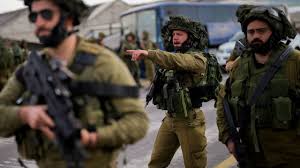
Israeli soldiers have been patrolling the roads near the border with Lebanon, on Monday, amid threat of a regional conflict between Israel and Iran-backed Hezbollah.
Iran’s Foreign Minister Amir Abdollahian on Monday raised the specter of expanded fighting after talking to counterparts in Tunisia, Malaysia and Pakistan.
“Underlined the need to immediately stop Zionist crimes & murders in Gaza & to dispatch humanitarian aid,” he wrote on X, formerly Twitter.
“I stressed that time is running out for political solutions; probable spread of war in other fronts is approaching unavoidable stage,” he added.
It is a scenario that has gained more currency across a restive Arab and Muslim world as images of dead Palestinian civilians, including more than 500 children, flash on television screens and social media posts, reflecting a civilian death toll rapidly rising at a rate not seen in decades.
Meanwhile, the US has deployed two of its largest aircraft carriers — including the nuclear-powered USS Gerald Ford — to the eastern Mediterranean. It is an ominous sign of what may come if the situation on the Lebanon-Israel border combusts into a full-scale war.
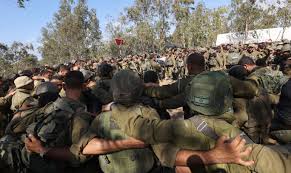
Both countries are bracing themselves. Israel turned the 4-kilometer area near its border into a closed military zone. It also evacuated residents from 28 communities within 2 kilometers of the Lebanese border.
In Lebanon, the national airline carrier Middle East Airlines said it parked five of its planes in Istanbul as a precautionary measure due to the security situation.
Beirut’s international airport is normally one of the first places to be hit by Israel after the eruption of war between the two countries. Swiss Air and Lufthansa have also suspended flights to Beirut.
On Tuesday, at least four Lebanese were killed in an exchange of fire between the two countries, according to the Lebanese Red Cross. Hezbollah said it attacked several Israeli locations, including two gatherings of troops. The Israeli military said Tuesday two reservists and a civilian were injured in an anti-tank missile attack from Lebanon.