


By Chinedum Ohanusi
From a paltry budgetary allocation of 29 billion Naira in 2024, it was recently announced that the Presidency has in an unprecedented move, jacked up the 2025 budget of the National Sports Commission (NSC) to 94 billion Naira – that is, nearly a 300% increase.
While the news, which runs paripasu with the decision of President Bola Ahmed Tinubu (GCFR) to breathe fresh energy to the sports landscape of the country, by dismantling the then Federal Ministry of Sorts Development, paving the way for the re-establishment of the Sports Commission (NSC), which was abrogated in 2015, by the government of President Muhammadu Buhari.
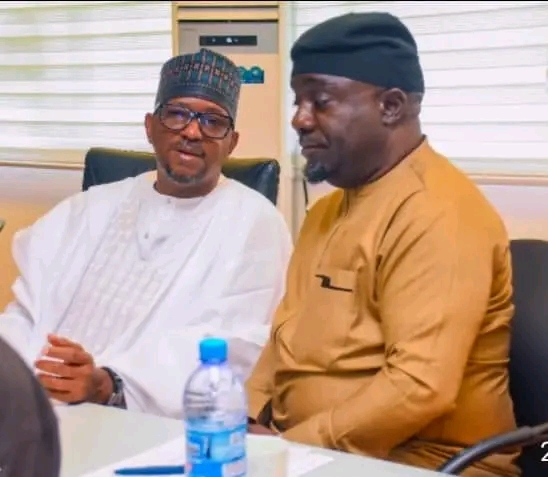
Another piece of good news, was the appointment of the experienced duo of Mallam Shehu Dikko as Chairman, and Hon. Olopade Bukola as Director-General of the NSC; whose re-establishment is yet to be backed by an act of the national assembly, but we hear efforts are being made to fine tune the bill that will give the NSC its legal teeth.
But this article is not essentially meant to deliberate on all of the NSC, funding of Sports in Nigeria, or the legality or otherwise of the NSC.
My sole aim is to draw attention of the federal government, the NSC, and Nigeria Football Federation (NFF) to the Nigeria Premier Football League (NPFL) – a potential gold mine – that has been untapped overtime, but has the propensity to add to our GDP, while providing jobs, directly and indirectly for thousands of our youths, and young ones at heart.
To start with, I peeped into the English Premier League model, and found that after the Hillsborough disaster, a commission headed by former Arsenal Vice Chairman, David Dean was instituted to find ways of averting the disaster that led to the death of about 92 fans.
In addition to accomplishing this task, the Mike Dean commission in their report, recommended how and why the government should invest in the evolution of the semi professional league, to make it the Premier League we all adore today.
Despite its initial hesitation, the government of Prime Minister Margaret Thatcher eventually played ball, and huge funds (grants) were released for all the top teams to improve on their grounds and facilities.
Without boring you, we can all see for ourselves how much the Premier League rakes in, as annual income from taxes, royalties, and football related tourism.
The Nigeria Premier League which was first inaugurated in the 1990s, is fashioned after the English Premier League, and the EPL mirrors our domestic league in so many ways, except in the funding of the clubs, or the League Body.
To dig into this, I spoke with Coach Samson Unuanel, one of the top Nigerian Coaches spearheading the establishment of the Republic of Benin top flight, otherwise called the Ligué 1. Take a listen to what he told me; “this is the first season of the league; but only two of the teams shared the same home ground; as all the other teams have their own pitches, and the grounds are all in good condition for good football”.
According to Unuanel, the Benin government from the outset, gave financial help [grants] to all the team, and will be doing so every other season untill the clubs reach a certain level of suitability.
He therefore advised the Nigerian government, to emulate the models in England and Benin, by investing reasonably in the NPFL to spark off a revolution that will serve as a catalyst for the restoration of the loss glory of the NPFL, which used to be rated in the Africa top-5, but is now languishing outside the top 12.
According to him, “when such money is given out, the government should also have a very reliable body, to ensure that a template for both the league body and the beneficiary clubs, in spending such funds is rigorously followed by all; that’s exactly what happens here in Benin, and we can borrow a leaf from them”.
The Benin Republic League has two conferences, and each team is programmed to play 36 games in the regular season, and the top two sides from each conference will have two additional playoff games to decide the teams that will play on the continent, and the winners of the title.
Though Nigerian clubs have mostly played with North African clubs like Al Ahly SC, Zamalek SC, Etoile du Sahel or Wydad Casablanca; Enyimba Int’l FC of Aba broke the jinx of Nigeria never winning the CAF Champions League, formerly called the Serku Toure Cup, and they did so by winning it back-to-back in 2003 and 2004. Since then, hardly have any Nigerian club managed to make it out of the group phase, or talk of playing in the semifinals.
Luckily, most of the teams in the NPFL are owned by state governments, and once a powerful model is evolved, the commission that will be put in place to see to the proper use of the funds invested by government.
Soon, the draws for the quarterfinals of two of CAF’s Inter-Club Championships, the Champions League and Confederation Cup will be held in Doha; but sadly no Nigerian side will be in both hats at the ceremony; the narrative can only change of we take the right steps to reposition the NPFL for the better.
