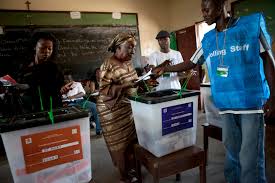
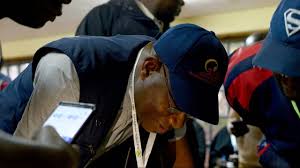
Current president of Liberia, George Weah of the Coalition for Democratic Change (CDC), elected in 2017, is contesting against the presidential election alongside former Vice President Joseph Boakai of the Unity Party (UP) and businessman Alexander Cummings of the Collaborating Political Party (CPP) and 17 others.
Weah, a former international football star, rode to victory on a wave of optimism in 2017, bringing hope to a country that had been devastated by two concurrent civil wars between 1989 and 2003, and the Ebola epidemic of 2014-2016. His election was an historic event, marking the country’s first democratic transfer to power since 1944. He promised to tackle poverty, create jobs, build roads and end corruption.
Nearly five years after he took office in 2018, the former Ballon d’Or winner remains popular in some parts of the country, but anger is growing over persistently high levels of corruption and the cost of living.
Here’s what you need to know about the Liberian election:
In a country still recovering from two wars that killed a quarter of a million people, the threat of violence is never far from the minds of voters. Old fears were stoked last month after three killings during election campaign clashes in the northern Lofa county.
The incident involved supporters of Weah’s Coalition for Democratic Change (CDC) and the Unity Party(UP). The latter party is led by Joseph Boakai, who served as vice president under the administration of Ellen Johnson Sirleaf and is considered Weah’s main rival in the presidential vote.
Joseph Nyuma Boakai, Liberia’s former vice president and presidential candidate of the Unity Party (UP), speaks during a campaign rally in Monrovia, Liberia, in 2017.
In August, Weah’s supporters carried a coffin through Monrovia, with images of Boakai’s face plastered on the sides, provoking anger and a resurgence of grief. The ruling party was reportedly reluctant about condemning the spectacle.
All parties vying in the polls – 46 have been accredited by the National Elections Commission – pledged in April to refrain from violence in the so-called Farmington River Declaration, drafted under the aegis of the United Nations and the Economic Community of West African States (ECOWAS).
The election is holding on Tuesday 10, October 2023.