


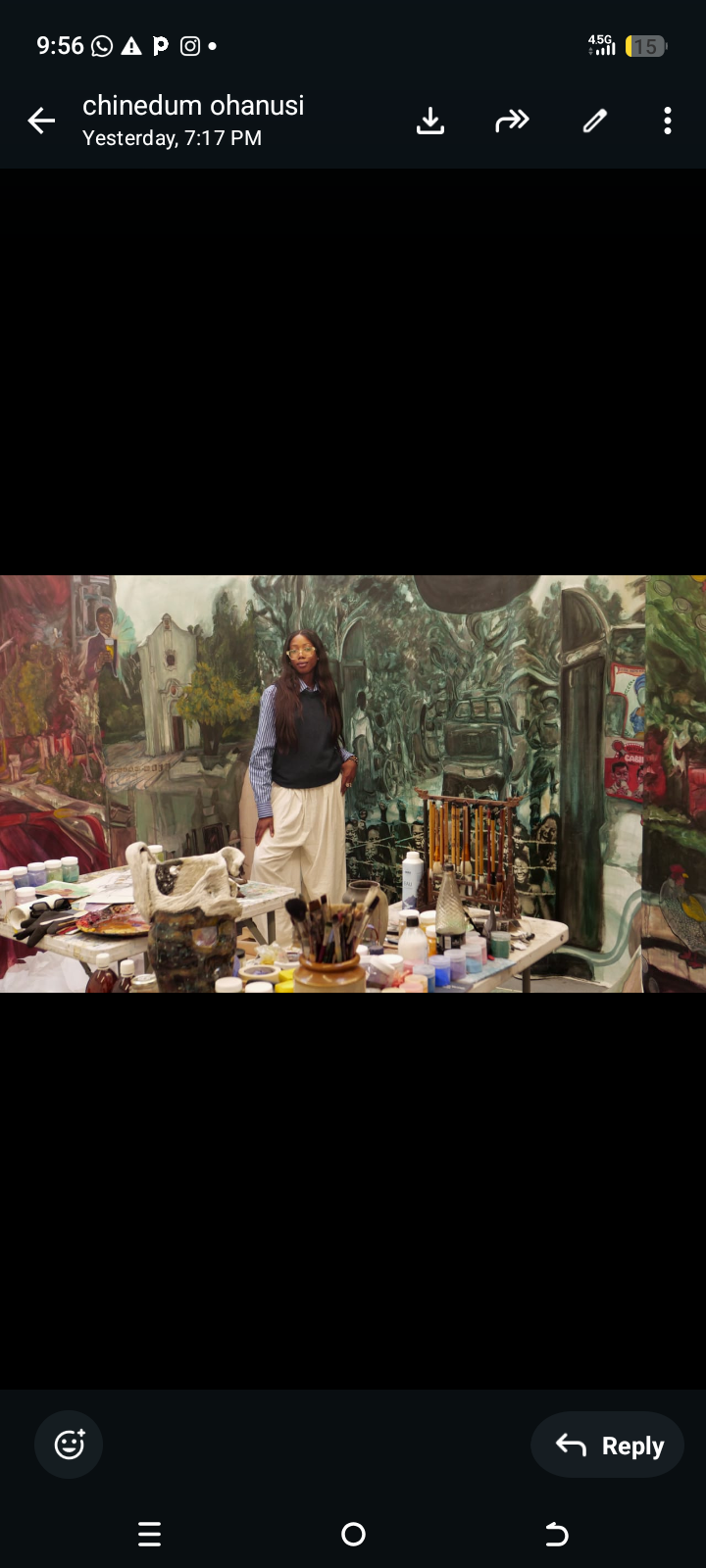
As Ngũgĩ wa Thiong’o writes at the opening of Decolonising the Mind, “The effect of a cultural bomb is to annihilate a people’s belief in their names, in their languages, in their environment, in their heritage of struggle, in their unity, in their capacities and ultimately in themselves.”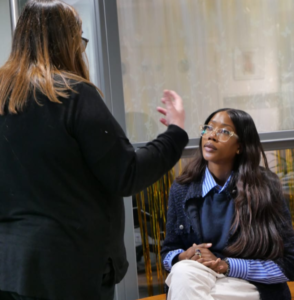
I begin this reflection with that same urgency, an appeal to our collective ethos as Nigerians to reclaim what has always been ours.
On March 20, 2026, I undertook an act that, in its own small way, altered the historical record. As both an
artist and a student at the Slade School of Fine Art in London, I worked alongside Delphine Mercier, curator at the Department of Anthropology, University College London (UCL), to correct the colonially anglicised spellings of Nigerian names within UCL’s ethnographic collections database.
This act, simple
in execution but profound in implication, was a direct gesture of decolonisation. The need for this intervention emerged during my research into the cultural and material significance of bronze and brass in Nigerian art. What began as artistic inquiry quickly revealed a deeper issue: the persistence of colonial distortions within institutional archives.
Now that this conversation has begun, I urge Nigerians everywhere to actively engage with publicly
accessible archives of our heritage.
We must see these works for ourselves, study them, and ultimately reclaim authority over our own narratives. This is a call to bring the archive home, intellectually,
culturally, and historically.
Practice and Encounter with the Archive
As a multidisciplinary artist working across various media, primarily within the diaspora, but also in Nigeria, specifically in Benin City and Abuja, access to primary sources has been central to my practice.
By “practice,” I mean the body of work I build through continuous, everyday making.
Internationally, Nigerian artistry is widely recognised within the visual arts.
However, this recognition often takes place in exhibitions that are geographically distant and limited in time. A recent example is Nigerian Modernism at the Tate Modern in London, which featured works by Ben Enwonwu, a former Slade student.
While important, exhibitions like this are temporary and require paid access, which limits who can engage with them. The archive operates differently. The ethnographic collections database at University College London is a digital system built around physical objects held in storage.
Each entry includes information such as provenance, location, dates, and notes on how the object entered the collection. Many of the works I examined come from the collection of M. D. W. Jeffreys, with related materials also held by the British Museum, which maintains its own accessible archive.
Working through the database allowed me to follow how materials moved across regions. Item J.0085, listed as “Ten pearl buttons,” is recorded as coming from Onitsha. In this entry, both “Igbo” and Onitsha were spelt inconsistently.
These spellings were corrected as part of the changes we made. The object itself includes four brass loops. That detail matters. Brass connects the object materially to Benin, where it held both artistic and economic value.
Placed alongside its recorded location, it points to movement, of material of people and exchange. Item J.0095, described as “Twisted bronze wire,” is also listed as coming from Onitsha, again originally spelt incorrectly before we corrected it.
In its original classification, M. D. W. Jeffreys describes it as “Body decoration and currency.” That description holds weight. It shows that the object is both worked, shaped by hand, and part of an economic system. Bronze here is not neutral material; it carries function,
value, and intention.
This is where the archive becomes more than documentation. It allows you to read objects closely and
draw connections across time and place. For me, this is tied to understanding my Edo heritage. Bronze is
not just a material I use, it is a way of thinking through history.
The Benin bronzes stand as evidence of a highly organised and centralised state. Dating back to the 13th and 14th centuries, they were produced using brass, a copper-zinc alloy that also functioned as currency
in trade with European merchants.
These works record power, hierarchy, and knowledge. Bronze casting did not happen because metal was abundant. It happened because the state had the structure and authority to sustain it. To call these works “artefacts” alone reduces what they are.
Access to archives like this matters because it is continuous and open. Unlike exhibitions, it does not depend on location or timing. It allows for sustained engagement. These records sit there, waiting to be read properly.
My practice is built on the belief that Nigerian craftsmanship and artistry stand on equal ground with, and often exceed, Western traditions. To argue that properly, I have to work with primary sources. I also think it is necessary to understand the archives that already exist about us, the same ones that have shaped how
others see us. If we are adding to that record, we should be doing it with clarity about what came before and with a stronger sense of who we are.
This research began from a personal place. I was trying to. understand my paternal grandmother’s
movement to Anambra State, and how she came to meet my grandfather. That line of questioning led me
into the archive, and from there into a wider set of connections between material, place, and history.
Intervention in the Archive while navigating the UCL ethnographic database, I encountered multiple instances of misspelt Nigerian
names, most notably the anglicised rendering of Igbo as “Ibo,” alongside repeated inconsistencies in the
spelling of Onitsha.
Seeing the name of my own people misrepresented in this way was unsettling. It raised a simple question:
If we do not challenge these inaccuracies, how can we expect anyone else to recognise them as errors? I initially expressed this concern in an email to Delphine Mercier. She responded with openness and a
clear willingness to act. There is often an assumption that history, especially within institutions, is fixed
or inaccessible. But in this case, the history in question is anthropological. It is about people. And we,
ourselves, are part of that history. Working together, we edited the catalogue entries to reflect accurate spellings. This was not about removing history, but correcting the record so that it reflects us more truthfully.
Our conversations also made clear that, despite the scale and importance of these collections, they are
under-resourced. The breadth of the archive makes detailed, ongoing updates difficult without sustained attention. Yet these records are primary sources. They shape how history is read, taught, and understood.
Below is a selection of the entries that were corrected, including the corrections that were made. Items with their accession number and descriptions quoted below from their catalogue:
J.0085 – “Ten pearl buttons. Four have brass loops, one is glued, five with centre holes. Original
classification: J: Body decoration and currency.”
Igbo was spelt inconsistently within the same entry, and Onitsha was also incorrectly spelt. Both were
corrected. J.0095 – “Twisted bronze wire, elaborately twisted and forming shape/size of bracelet. Original
classification: J: Body decoration and currency.” Onitsha was written in its anglicised form. This was
corrected.
M.0020 – “Carved animal figure, possibly of a dog. Original classification: M: Ritual objects, masks,
effigies, charms, miscellaneous carvings.” The same spelling issue appears here and was corrected. N.0002 – “Carved wooden circular stool. Two-tiered with six geometric figures on each level. There is a
hole drilled in the centre of the top, middle, and base tiers. Silver flakes appear on parts of the surface (possibly added after production). Original classification: N: Stools, headrests, neck rests.” Igbo was
correctly spelt, but Onitsha was recorded with a separate spelling error, which was corrected. P.0012 – “Small wooden comb, short with four teeth. Original classification: P: Combs and hairpins.” Igbo was correct; Onitsha appeared in its anglicised form and was corrected. P.0026 – “Ivory hairpin used by women. Round handle with a narrow point at the end.
Original
classification: P: Combs and hairpins.” Igbo was correct; Onitsha appeared in its anglicised form and was corrected.
R.0033 – “Carved varnished wooden stopper depicting a head with a headdress. The headdress is as large as the head itself. The carving of the nose and mouth is executed in one continuous movement. The neck
forms the functional stopper. White paint residue remains (possibly previously painted). Original
classification: R: Domestic objects.” Igbo was correct; Onitsha appeared as “Onitscha” and was corrected.
Reflection and Call to Action.
These corrections may appear small, but they matter. I am reminded yet again of Ngũgĩ’s words and names carry meaning. I urge you to access the database as to leave them distorted is to continue a version
of history that was never fully ours. This experience reaffirmed the interconnectedness of art and anthropology. Though I do not often inhabit anthropological spaces, my presence there underscored how deeply our cultural production is tied to historical documentation and interpretation.
Correcting these spellings was not merely administrative, it was symbolic. It was a refusal to accept a
narrative imposed by colonial frameworks.
We must recognise that change is ongoing. Small actions, when multiplied, can have monumental impact.
As Nigerians, we cannot afford passivity in the face of inherited inaccuracies.
In that moment of correction, I felt a profound sense of responsibility and possibility. Not because history was rewritten, but because it was acknowledged, and adjusted, with intentiond
