


BY OSABUOHIEN VIVIAN-ROSE
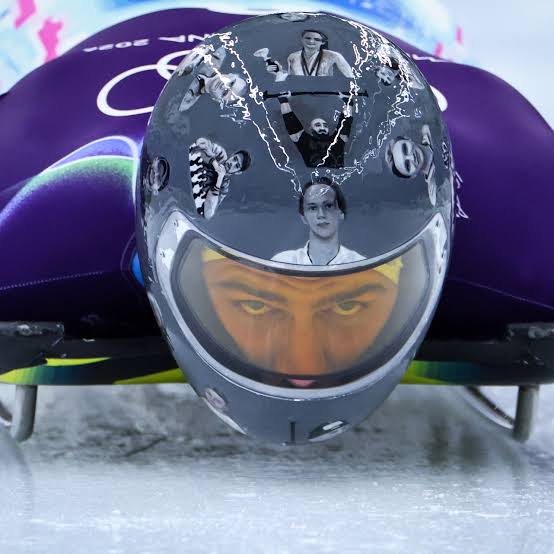
Ukrainian skeleton athlete Vladyslav Heraskevych has been disqualified from the Winter Olympics for “refusing to adhere” to the International Olympic Committee’s (IOC) athlete expression guidelines regarding his insistence on wearing a helmet featuring images of athletes killed during the war in Ukraine in competition.
IOC President Kirsty Coventry met with Heraskevych early Thursday in an attempt to break the impasse, but the Ukrainian stood his ground, resulting in the disqualification.
In a statement, the IOC said, “Having been given one final opportunity, skeleton pilot Vladylsav Heraskevych from Ukraine will not be able to start his race at the Milano Cortina 2026 Olympic Winter Games this morning.
“The decision followed his refusal to comply with the IOC’s Guidelines on Athlete Expression. It was taken by the jury of the International Bobsleigh and Skeleton Federation (IBSF) based on the fact that the helmet he intended to wear was not compliant with the rules.
“The International Olympic Committee (IOC) has therefore decided with regret to withdraw his accreditation for the Milano Cortina 2026 Games.
Heraskevych told CNN Sports that he is planning to appeal the decision to the Court of Arbitration for Sport (CAS).
Latvia skeleton coach Ivo Steinbergs told Reuters that a protest has been sent by his federation to the International Bobsleigh and Skeleton Federation (IBSF) requesting Heraskevych’s reinstatement.
Ukrainian President Volodymyr Zelensky took to X to criticize the IOC’s decision to disqualify Heraskevych.
“Sport shouldn’t mean amnesia, and the Olympic movement should help stop wars, not play into the hands of aggressors,” he wrote.
“Unfortunately, the decision of the International Olympic Committee to disqualify Ukrainian skeleton racer Vladyslav Heraskevych says otherwise … No rule has been broken.”
“We are proud of Vladyslav and of what he did. Having courage is worth more than any medal.”
Zelensky later awarded Heraskevych Ukraine’s highest civilian honor, the Order of Freedom, for “his dedicated service to the Ukrainian people, civic courage, and patriotism in defending the ideals of freedom and democratic values.”
Ukrainian foreign minister Andrii Sybiha, meanwhile, called the decision “a moment of shame” in a post on X, adding, “We are proud to have Vladyslav who has not betrayed them. Thank you for your principles and bravery.”
Fans were just arriving at the Cortina Sliding Centre when the news broke that Heraskevych had been disqualified and the reactions from Ukrainians in attendance were of shock.
The move to disqualify Heraskevych comes after he said on Tuesday that he would defy the IOC and wear the helmet in competition, saying, “I wear this helmet two days ago, yesterday, today. I will wear it tomorrow and I will wear it for the race day.
“These people sacrificed their lives and because of that, I am able to be here today. I’m able to be at the Olympics, and I will not betray them.”
The helmet in question features a number of athletes who were killed due to the ongoing war in Ukraine: weightlifter Alina Perehudova, boxer Pavlo Ischenko, ice hockey player Oleksiy Loginov, actor and athlete Ivan Kononenko, diver and coach Mykyta Kozubenko, shooter Oleksiy Habarov and dancer Daria Kurdel.
On Wednesday, IOC spokesperson Mark Adams told a news conference that he wanted Heraskyevch to compete and “have his moment, that’s very, very important” but insisted that the his helmet cannot be worn on the field of play.
Heraskevych topped the standings after the fifth training session in the skeleton Wednesday, before opting out of the sixth and final training session.
